Maskumambang: A Handwritten Font That Makes Small Business Branding Feel Personal
Last month I sat down to redo the labels for a small batch of soy candles I had been perfecting. The glass jars were clean, the wax was poured, but every time I printed a label with my usual system font, something felt off. The words “Lavender & Cream” looked sterile, like a hospital chart rather than a handmade gift. That’s when I pulled up Maskumambang, a handwritten font I had bookmarked weeks earlier. One click, one test print, and I knew I had found the missing piece of my brand identity.
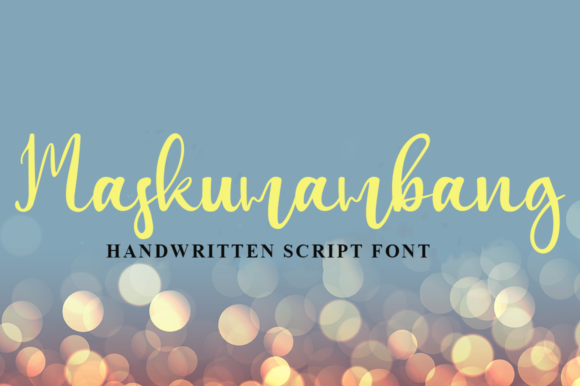
Maskumambang is a lovely handwritten font that carries a friendly, flowing energy. Its characters aren’t stiff or mechanical—they curve and connect with the kind of natural rhythm you’d see in a well-written note. For a small business owner trying to bridge the gap between professional polish and personal warmth, this typeface is a useful tool. It doesn’t shout “look at me”; it invites customers to read, to stop, to feel the effort behind the product.
What Makes Maskumambang Stand Out as a Script Font
Not all handwritten fonts are built the same. Some are too erratic for packaging; others are so neat they lose the human touch. Maskumambang sits in a sweet spot. Its strokes are smooth and consistent, with just enough variation in letter height and slant to feel authentic. The ascenders and descenders are graceful—watch that lowercase g loop under the baseline, or the way the h rises with a gentle flick. That movement gives the font a personality that’s both approachable and elegant.
If you’re in the market for a script font that works for wedding invitations, birthday cards, or product watermarks, this one delivers. It’s also labeled under the Script Amp category, which means it’s designed to add impact and emotion to display text. That “amp” stands for amplification—and that’s exactly what Maskumambang does for your brand message. It turns a simple product name into a statement.
Real Packaging Scenarios: From Bakery Boxes to Boutique Tags
I’ve tested Maskumambang across several customer-facing materials, and the results were consistently appealing. For product labels on candle jars, the font printed clearly at a modest size—around 12 points—without losing its handwritten charm. The letter spacing is wide enough to remain legible even when the text wraps around a curved surface. That’s a big win for anyone selling bath salts, skincare jars, or mini jam pots.
For a friend who runs a small bakery, we used Maskumambang to wordmark her cake boxes. The phrase “handmade with love” set in this typeface made the packaging feel like a personal gift rather than a generic box. She reported that customers started taking more photos of the packaging for social media—the font had become a conversation starter. Similarly, on boutique clothing tags, the font gave the brand name a soft, artisanal feel. It didn’t compete with the fabric; it complemented it.
Menus also benefit from Maskumambang’s friendly tone. A café owner I know used it for the headings on her chalkboard-style menu (printed, not handwritten each day). The font added consistency across seasonal specials and regular items without making the board look cluttered. For longer descriptions, though, she paired it with a clean sans serif—more on that later.
Bringing Consistency to Social Media and Digital Graphics
One area where small businesses often struggle is maintaining a consistent look across Instagram posts, website banners, and promotional emails. Maskumambang excels here because it works beautifully as a display font for headlines and short phrases. On Instagram story templates, a six-word phrase like “new batch just dropped” set in this font feels immediate and warm. Followers scrolling past will pause longer than they would on a standard typeface.
I also used it for a watermark on product photography. The font’s flowing letters overlay nicely on images without dominating the shot. That’s a subtle but powerful way to build brand recognition. Every time someone sees that watermark, they subconsciously register the personality of your business. Over weeks and months, that visual consistency pays off in trust and recall.
For online shop banners—say on Etsy or a simple Shopify store—Maskumambang can anchor the top of the page. Keep the text short: your shop name or a welcoming tagline. The handwritten style signals to visitors that this is a human-run business, not a faceless corporation. That emotional connection is gold for handmade sellers and independent creators.
Readability Tips and Font Pairing Ideas
No matter how beautiful a font is, readability comes first. Maskumambang is best used for headlines, logos, packaging titles, decorative accents, and short phrases. For body text or tiny labels (under 10 points), I recommend switching to a neutral sans serif. The contrast between a playful script and a clean sans serif creates visual hierarchy and keeps your design looking professional.
Here are a few pairings that worked well in my tests:
- Maskumambang + a light sans serif like Open Sans or Lato. Use the sans serif for ingredients, descriptions, or fine print.
- Maskumambang + an elegant serif font such as Playfair Display. This combo works for upscale wedding stationery or premium product lines.
- Maskumambang + a simple handwritten font (only if styles differ enough). For example, a blocky handwritten font for subheadings can create a cohesive but varied look.
On mobile screens and social media thumbnails, keep your Maskumambang text at least 20 points or more. The open letterforms hold up well, but tiny sizes can blur the finer strokes. Test on your own phone before committing.
What to Check Before You Use Maskumambang Commercially
Before you go all-in on this font for your product packaging, business cards, or client work, review the licensing details. Like many premium fonts, Maskumambang may require a commercial license if you’re using it on merchandise, templates, digital downloads, or anything you sell. Check the included file formats—typically you’ll find OTF and TTF—and look for alternates, ligatures, and stylistic sets. Those extras let you customize letter connections, which is fantastic for creating a unique logo lockup. Also verify multilingual support if you serve an audience with special characters. A quick test in your design software (Canva, Adobe Illustrator, or Affinity) will confirm compatibility.
When you’ve done your due diligence, you can place Maskumambang into your brand toolkit with confidence. It’s not a font that screams for attention—it earns it by making every piece of your branding feel handwritten, considered, and genuinely yours. For a small business owner, that’s the kind of asset that turns a product into a memory.